01
Test cheap, repeat often
Finding product-market fit
A cheap experiment beats an expensive assumption, and you can run it again next week. How to read the real signal and reach fit before the runway ends.
Most founders don't lose because the idea was wrong. They lose because they only ever got one attempt at it.
Entrepreneurship and Mixed Martial Arts taught me the same thing: work at a level you can repeat tomorrow, and you buy yourself more attempts. Twenty attempts at product-market fit beats one heroic bet. I've built and sold two companies this way.
Here you'll get the method itself: how to test an idea cheaply, how to read the signal that tells you you've found fit, how to sell it, and how to run a week that still works in year ten.
And why am I doing this? Simple. I want to give back. And if something here helps you win, pay it forward.
Worked and learned from some of the world's best
The method
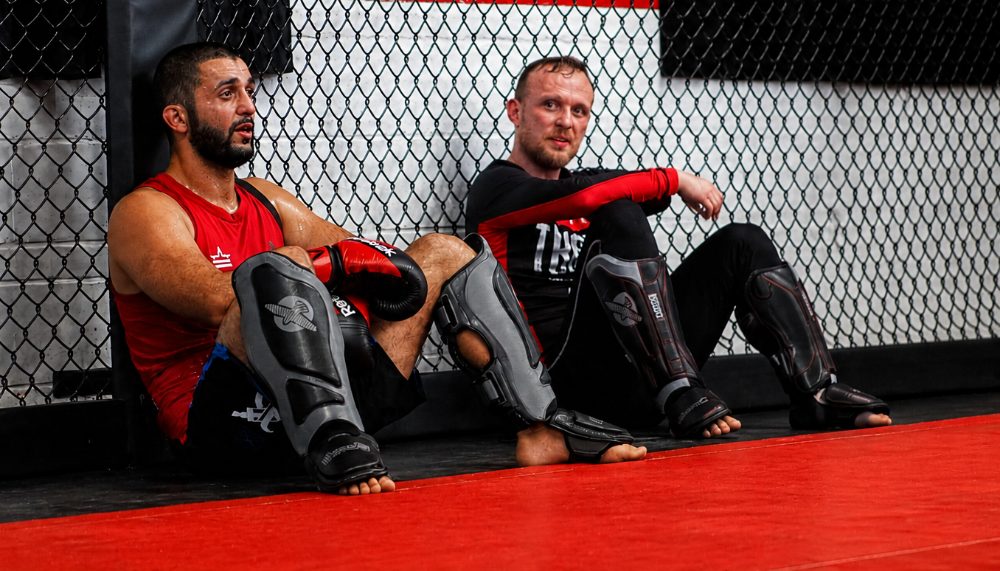
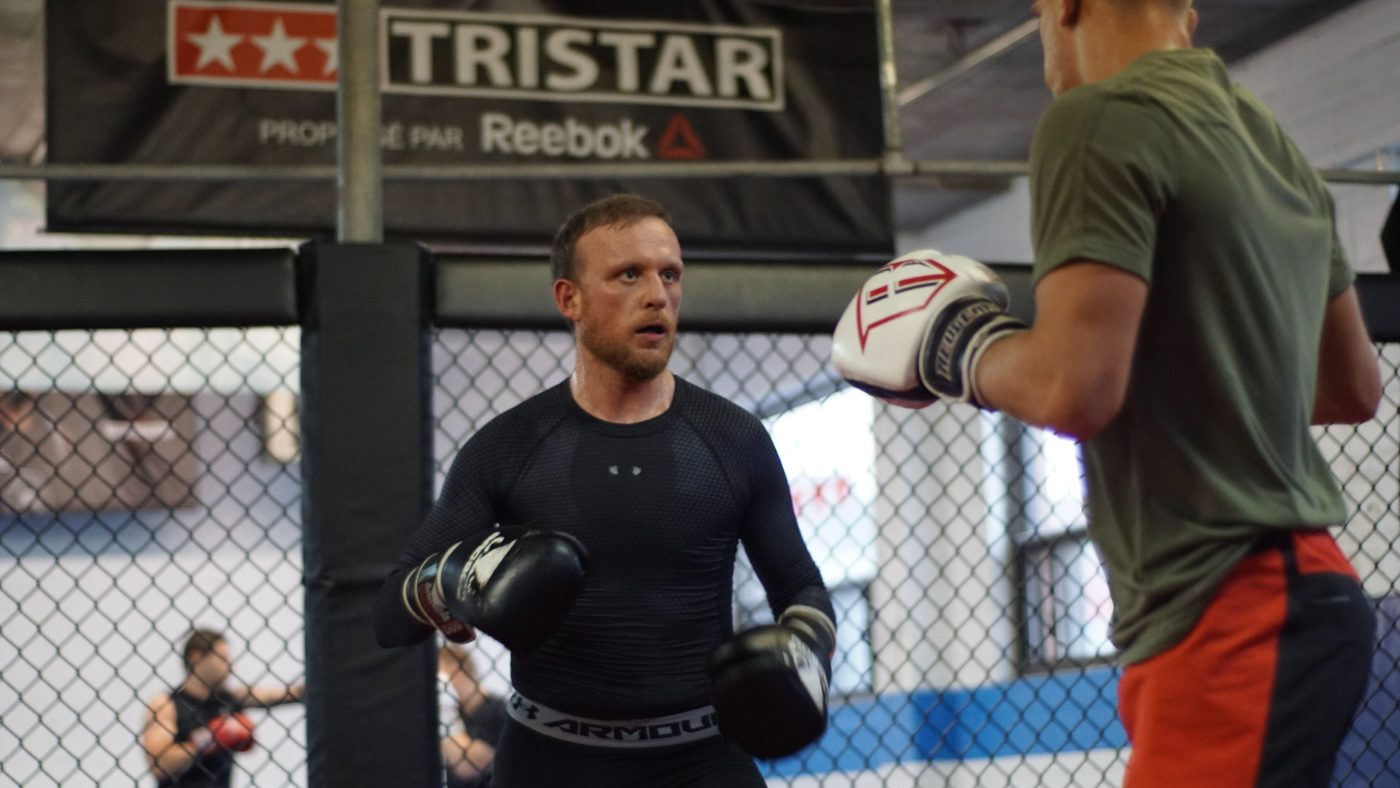
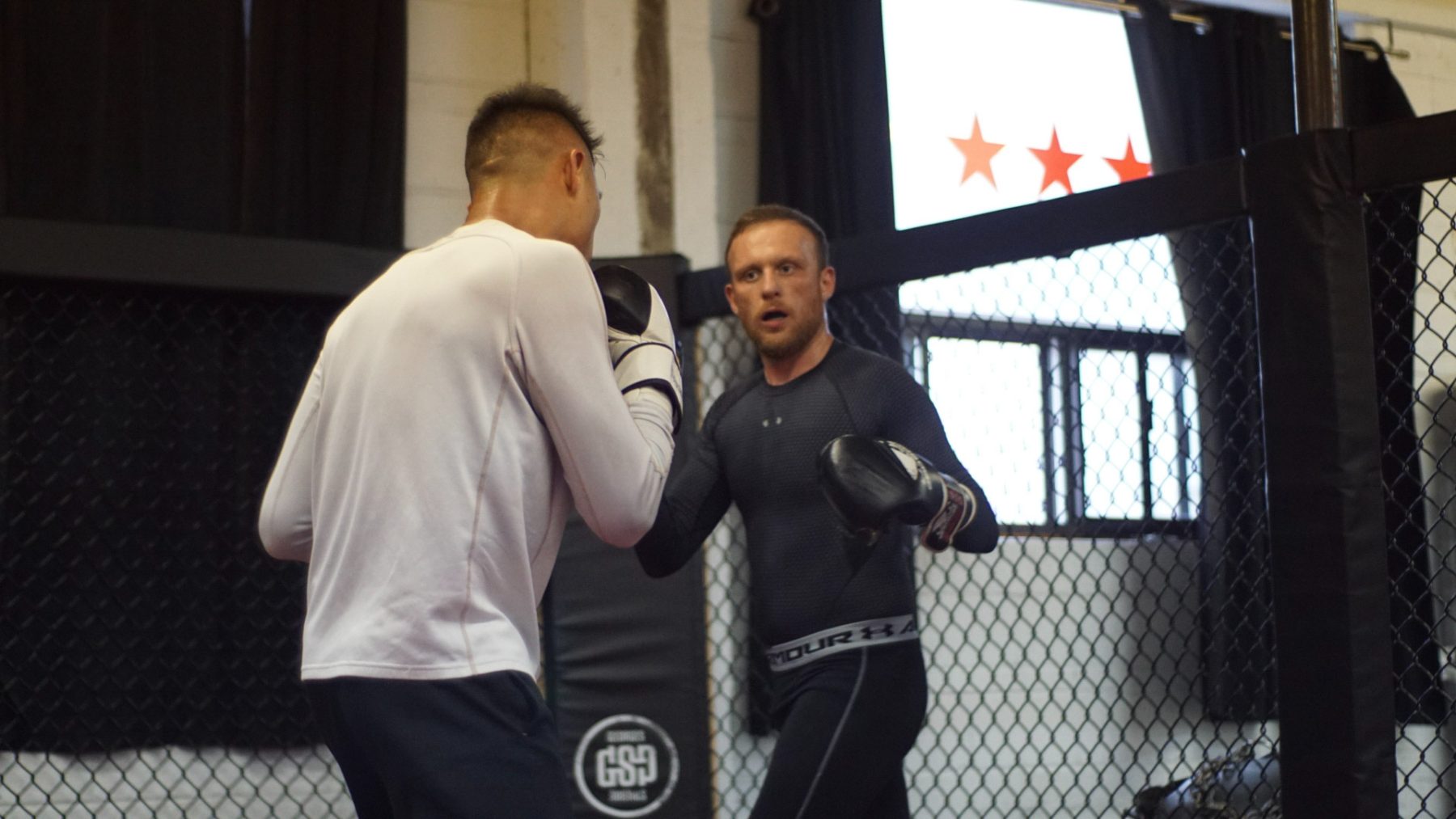
I train mixed martial arts and Brazilian jiu-jitsu under Firas Zahabi at Tristar Gym in Montreal, the coach behind Georges St-Pierre, Rory MacDonald, Jon Jones and countless other UFC fighters. His method is contrarian in a sport built on destroying yourself: train at a level you can repeat tomorrow, stop before failure, choose volume over intensity, longevity over heroics.
I've been through two incubators and years in Entrepreneurs' Organization. I learned more about building a company on the mats at Tristar than from any of it: don't burn yourself out, carry the right tools to get to product-market fit, and aim to be the best in the world at one thing.
Founder culture is built on the opposite premise. The people who win are rarely the ones who went hardest for six months. They're the ones still there in year ten, having compounded a thousand ordinary weeks, with more time to keep trying new things until they hit product-market fit.
Rinse & repeat
The nine hours go into one thing at a time: getting to product-market fit first, then refining and hardening the product once the market has told me what it wants.
Work from eight to six. Jiu-jitsu from six thirty to eight. An hour at the end to write out tomorrow's tasks, so the next morning starts with executing instead of deciding. Fridays I stop at six. A half day Saturday, two hours Sunday. The extra hours compound over years, and nothing about it burns me out.
Product-market fit
the overlap, nothing else
Everything outside the overlap is work nobody asked for.
11.5h
Mon
11.5h
Tue
11.5h
Wed
11.5h
Thu
9h
Fri
4.5h
Sat
2h
Sun
8:00 to 18:00 — nine hours of work, on what actually moves the needle
18:30 to 20:00 — jiu-jitsu at Tristar, four evenings a week
One hour to write tomorrow's tasks, last thing before the day ends
Do more than most people do, and less than you are capable of. It compounds, and you never have to stop.
I wake up already knowing what I have to do, so the morning goes into executing instead of deciding.
I only work on the things that are crucial and move the needle for the company. Everything else waits or dies.
Not for the aesthetics. So I don't crash halfway through the nine hours and lose the focus.
For example
Most founders disappear for a year, build the perfect product, and bet the company on one unvalidated launch. That is training to failure. It only has to go wrong once.
So we took a small retail space, built cheap VR prototypes, and ran them on weekends while strangers walked up and played. One question mattered: did they want to play again?
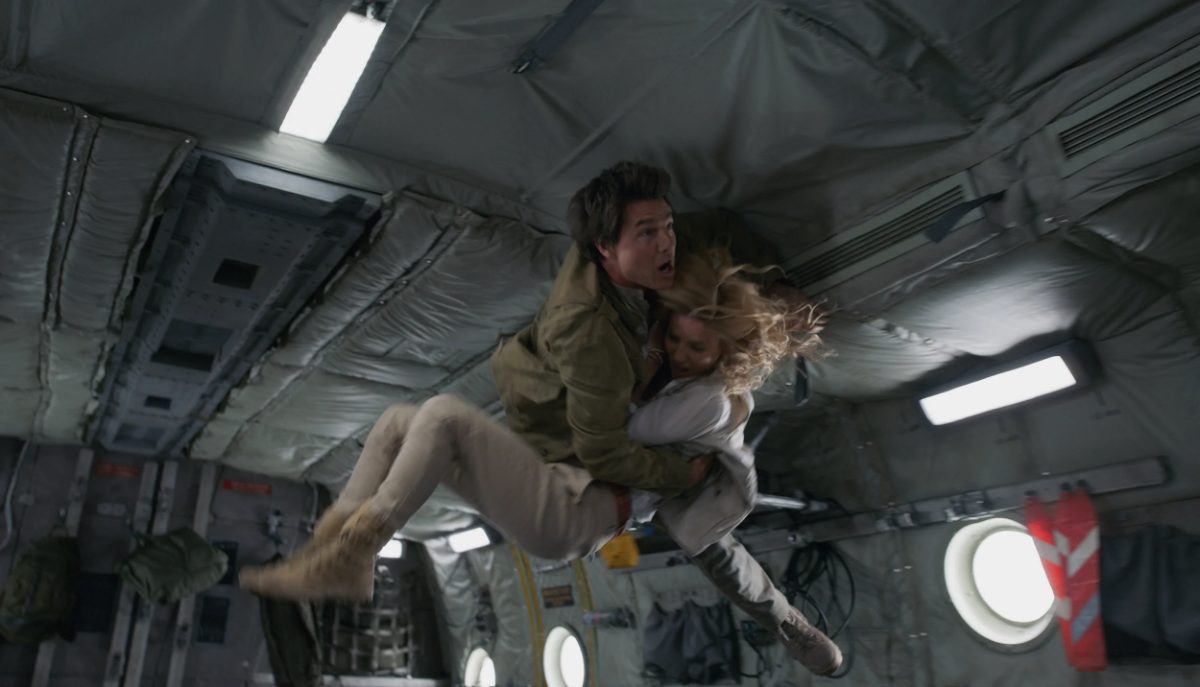
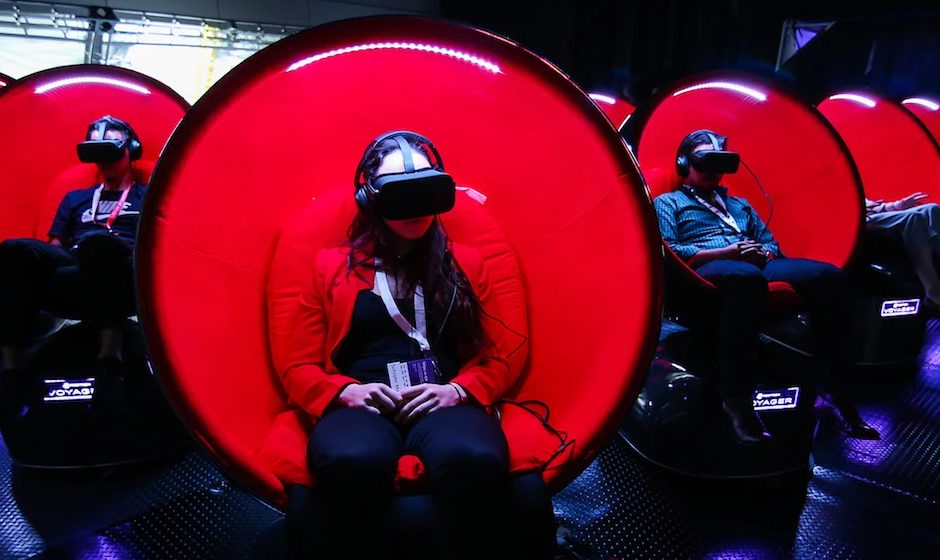
I know what the expensive version looks like. At the agency we built The Mummy VR with Tom Cruise, launched with Universal Pictures and IMAX, on Positron motion chairs. It cost a million dollars, and it was fine — we were the hired agency, so the money wasn't ours.
Had that been my own company, it would have failed spectacularly. There was no repeat value. Nobody wanted to do it a second time, and a million dollars buys you exactly one attempt at finding that out.
That experiment validated the customer before a dollar of investor money was at risk. It was the most important decision we ever made, and it cost almost nothing — which is the whole point. A test you can afford is a test you can run again.
The version we were proud of
Players felt self-conscious, the room had no energy, almost nobody came back.
The version the market picked
Groups competed, laughed and came back. Operators saw the revenue move. It became a destination.
How many attempts you get
same eighteen months, same money
Build the perfect product, launch once
1 attempt
everything rides on this one
Guess right and you win. Guess wrong and there is no second try.
Run a cheap test you can repeat
20 attempts
Each one teaches you something the last one couldn't. Only one of them has to land.
Pacing isn't about comfort. It's how you afford twenty attempts instead of one.
What I write about
01
Finding product-market fit
A cheap experiment beats an expensive assumption, and you can run it again next week. How to read the real signal and reach fit before the runway ends.
02
Running the company without burning down
What to do in the long hard bursts, and how to not still be in one a year later. Zahabi's training method, applied to the work.
03
Go-to-market and sales
Nobody buys your stack. They buy revenue, less risk or more time. Where your customers already gather, and how to help them buy.
The playbook, free
The mall store was one attempt. This is the whole method — every test, in order, behind a VR platform I scaled to 22 countries, raised $4M+ for, and sold.
Free, about a 15-minute read, no sign-up.
Two new videos a week on building a company. Everything else is a cut of them.
A short recap of the week's video, in your inbox. Two minutes. Unsubscribe anytime.
Free. Drafted from each week's video.
The work
Venture 01 — acquired
Co-founder and CEO, 2018–2026. Acquired by HeroZone VR.
A free-roam, multiplayer VR SaaS platform built for arena operators and location-based entertainment venues, deployed across 22 countries in North America, Europe and Asia. It included VERSUS, the most-played laser-tag VR game ever made.
Venture 02 — exit
Co-founder, 2015–2016. Successful exit.
Built around augmented and virtual reality, 5th Wall grew into a full-solution digital agency delivering AR, VR and 360° content for major brands globally — the bridge between Merchlar's tech roots and Phenomena's platform ambitions.
“The best ideas live at the intersection of what's technically possible and what the world isn't ready for yet. Finding product-market fit in that environment requires relentless iteration.”
The journey
2026 – now
HeroZone VR
Growing the platform and the operator network worldwide.
2018 – 2026
Phenomena VR eSport Arena
Raised $4M+, deployed in 22 countries, acquired.
2016 – 2017
ZONE3 Inc.
Built the immersive division of an $80M production company.
2015 – 2016
5th Wall Agency
AR and VR for Bell, Universal, Twitter, Ubisoft and Deloitte.
2011 – 2015
Merchlar
Canada's first augmented reality company. Represented Canada at the G20 and keynoted SXSW.
2009 – 2011
Monumental Technologies
The world's first AR platform letting artists build their own apps.
Quebec Entrepreneurs. Top 20 Under 30 in Canada.
Keynotes at SXSW, C2 Montreal, IAAPA, Infopresse and Capital Innovation.
Including Entrepreneur of the Year, 2010 to 2026.